
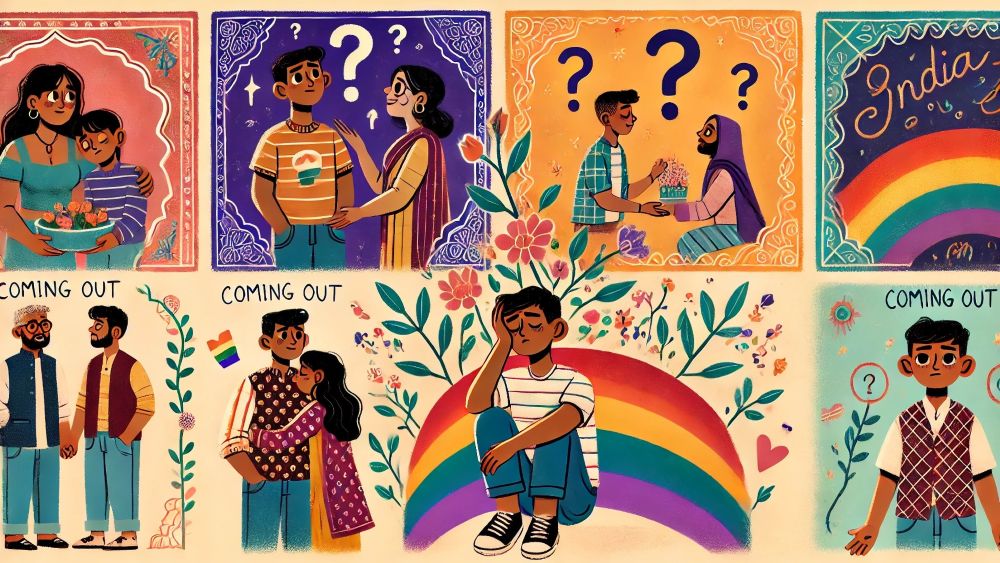
Coming out is a very personal and complex process, especially in a country like India, where societal expectations and cultural norms are still influencing the perception of gender and sexuality. Even though attitudes are changing, fear of rejection, misunderstanding, and discrimination is a reality for many in the LGBTQIA+ community. We delve into conversations with queer people who have undertaken this journey and understand the process of self-discovery, self-acceptance, and what it takes to be honest about who they are.
JOURNEY OF SELF-DISCOVERY
Understanding one’s sexuality or gender identity is rarely an overnight realization. It rather starts with a lot of self-reflection, questioning and an inner battle to define the emotions that don’t necessarily match the expectations of society.
One interviewee reported that it was during school that they realized their attraction to both boys and girls. However, it wasn’t until much later, during the COVID-19 lockdown, that they processed all this in solitude. Another interviewee spoke about their teenage years, saying, “I used to feel something different but never gave it much thought. Then, one day, I just sat down and accepted that I am bisexual.”
Self-acceptance is often the first challenge for many. Internalized fear, societal conditioning and a lack of representation often make it hard for a person to embrace his or her identity. But with growing awareness and conversations on gender and sexuality, more people are finding the courage to accept and celebrate themselves!
COMING OUT TO PEOPLE
Revealing one’s identity to one’s family is perhaps the most daunting experience in this long journey. While some are met with warmth and open arms, others face indifference or worse- an outright rejection.
For one, their coming-out experience was unexpectedly positive. “I told my brothers when I was out on a walk, and they were just laughing and saying now they have even a bigger pool of people to tease me about,” they said. That kind of acceptance is not common. Another interviewee remembered being afraid of being rejected before telling their parents. When they finally did tell them, their mother took a moment to reflect upon it all before embracing them and telling them, “We love you no matter what.”
Unfortunately, not everyone has such a story. Many people face problems with parents who do not acknowledge their identity or even deny having a conversation on the subject. One of the interviewees reported that their mother laughed off their attempts to explain the situation and it was evident that acceptance would be a long and hard road-“She didn’t take it seriously. She just made a face and brushed it off.”
Even when parents do eventually come around, it often remains a work in progress to educate and make them understand. At times, professional counseling or therapy has helped the family understand and accept the child’s identity.
CHALLENGES OF COMING OUT
It’s not just with family; there are challenges to coming out in social circles, workplaces and public spaces as well. The fear of discrimination, judgment or being treated differently deters many from fully expressing themselves.
One of the interviewees recalled that in certain friend circles, they did not feel like expressing their identity: “It took me a while to realize I can choose my own circle. I don’t have to stay in spaces where I feel unsafe.” They described the anxiety of going to their first queer event and continuing to feel anxious even after being convinced they belonged there.
Bullying and teasing are common, especially during school years. “In school, people weren’t mature enough to understand. I was bullied, and it made me self-conscious,” said a respondent. Fear of being ridiculed or not fitting in makes so many try to keep their identity locked up in the deep drawers for years and only express themselves when there is a safe space to do so.
MESSAGE TO THOSE STILL EXPLORING THEIR IDENTITY
A person should, in no case, be rushed towards understanding their sexual identity or orientation or even their gender. This journey could even take several years, as one needs to be sure of who they really are. “You don’t owe anyone an explanation. Take your time, explore safely, and surround yourself with people who respect and support you,” advised an interviewee.
One can also seek support from the community, whether it’s online or in-person. Connecting with people who have been in similar shoes makes a big difference. The internet can actually be a highly valuable source when used discerningly in dealing with personal identity.
MESSAGE FOR THOSE TRYING TO UNDERSTAND THE COMMUNITY
Allies, in particular heterosexuals, should engage in open-minded discussions about gender and sexuality. Education, understanding and simply being willing to listen can go a long way to make the atmosphere more accepting.
As one respondent aptly put it, “We are humans like you. Our preferences might be different, but that doesn’t make us any less deserving of respect.” Another added, “If you’re uncomfortable with same-sex relationships, that’s a ‘you’ problem, not ours. We’re just trying to live and breathe in our own skin.”
The core of an ally is listening, learning, and not judging others. An effort to understand can make a big difference in someone’s life.
CONCLUSION
Coming out is not just a moment in time; it’s a journey of self-acceptance, growth, and navigating a world that is still learning how to be more inclusive. Challenges are real, but so is the resilience of those who embrace their truth despite the odds. For each struggle, there is also a story of courage, acceptance and love. We can then hope for a future where coming out would not be the challenge but part of making one’s life more authentic because conversations are changing and society continues to evolve..!
February 2, 2025 @ 6:19 am
How thoughtful, respectful and well written. The quotes are extremely true and inspirational.