
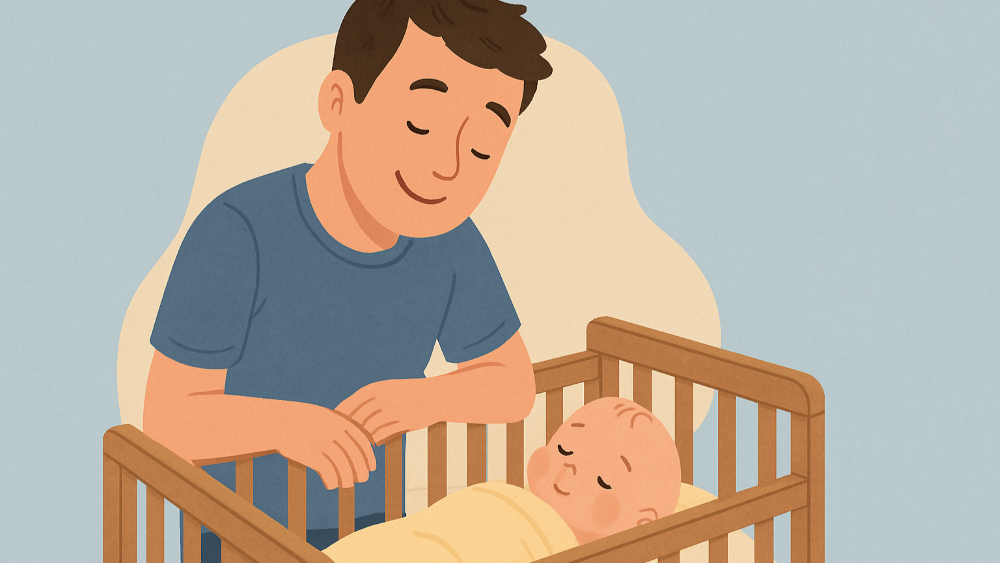
Whenever we discuss postpartum mental health we are usually only thinking about one image- that of a mother. Over the years society has made strides, to recognize how challenging it is for them during the postnatal period- between hormonal shifts and emotional overdrive. Awareness campaigns, medical screenings, and support systems are increasingly geared towards helping mothers navigate this deeply transformative phase.
However, in doing so we have left someone behind.
Fathers.
As one of our therapists puts it, “a mother has 9 months to bond with her child but a father doesn’t have the same opportunity.”
Until recently, the idea that new dads might also experience hormonal, emotional, and psychological shifts felt ludicrous- or worse, irrelevant. The arrival of a new child is treated as a journey that affects mothers biologically while new fathers are only affected logistically. But science is starting to gain on what many fathers have quietly felt for generations: the postnatal period can profoundly affect men.
BIOLOGICAL CHANGES IN FATHERS
New research has thrown into question old narratives, creating a more sophisticated picture of fatherhood. A study published in the National Library of Medicine analyzing new fathers in 2022 demonstrated that new fathers are biologically affected by changes in hormonal status that have complex ramifications for emotion, care and well-being.
Testosterone levels decrease at the time of child birth, which could be a biological mechanism fostering nurture and reducing aggression. Other hormones like oxytocin, prolactin and vasopressin can be elevated facilitating a sense of connection, empathy and emotional closeness with their infant.
The article discussing the studies in News-Medical emphasizes that changes in hormones are not subtle or trivial; they affect mood, libido and stress response. The altered states we associate with new fatherhood, and any changes in child-rearing behaviours, may not be a reaction to lifestyle or sleep deprivation- these behaviours and states could be biological, much like maternal postnatal changes.
CULTURAL LAG IN RECOGNIZING FATHERHOOD AS A TRANSITION
Lets face it, when we talk about parental support, it is mostly in regards to ‘maternal support’. Even if we still have a long wau to go, there has been great advancement to promote maternity leave, space for breastfeeding and even postnatal therapy. But there is barely any support for new fatherhood!
Many employers do not offer paternity leave, and even when they do, men are deterred from taking it either by policy or culture. Men are supposed to return to work in a few days without processing their adjustment, and ‘be there’ for their family without acknowledging that they are becoming someone different.
Fatherhood happens all of a sudden and with that comes a different kind of adjustment which is emotional, invisible and less endorsed and discussed.
One father shared his experience of balancing freelance work with new parenthood:
“I was away on a shoot for 40 days during pregnancy, and even after my son was born, I was away for weeks on projects. When I was home, I was editing, so I couldn’t give my full attention to him or to my wife. The workplace doesn’t really think about someone becoming a new father — it’s chaos, 24/7 deadlines.”
This highlights how the lack of workplace support compounds the emotional strain for new dads.
THE REALITY BEHIND THE SMILE
Many new fathers feel unprepared- both practically and emotionally. They might feel disconnected from their baby right from the start, out of their element not knowing how to support, or invisible in a caregiving system centered around the mother-infant dyad. They may struggle to balance work, expectations, and the quiet grief of losing spontaneity or autonomy.
None of this means that they are poor fathers. It means that they are human beings, trying to make sense of their new reality.
However, when these experiences remain unacknowledged—when dads are not asked about how they are doing or are not given permission to take a moment to stop—fathers start to internalize a damaging stance: “This isn’t about you. Just keep doing what you are doing.”
The father we spoke to, explained it really well:
“Last year, I was away from home for over four months, sometimes not coming back for two or three weeks. Every time I came back, he had grown so much — it would break my heart not knowing what happened in his life. One day while driving back to work, I just broke down crying, not even understanding why.”
TIPS TO SUPPORT PATERNAL WELLBEING
- Being Prepared for Change
New fathers often do not expect to change as well. Let’s remind them (and ourselves) that changes in mood, energy, focus, or needs will happen during this life phase of shifting to fatherhood. This is not a failure — it is biology.
- Initiating Conversations
Partners, friends, and families should continually check-in with the father as well — going beyond just the logistical needs. We want to ask things like: “What has surprised you most about all of this?” “Are you feeling connected to the baby?” This creates space for reflection without judgement. As one father suggested,
“Just converse with your partner, talk about what you’re feeling, whether you’re home or away. If you keep communicating, it’ll help everyone.”
- Facilitating Skin-to-Skin Time:
Being physically in contact helps to increase oxytocin, and therefore emotional attachment. It’s important to let fathers know that it’s emotionally and hormonally important to be physically present, not just doing chores or providing financially. Doing so better supports the baby’s growth and development, as well as the father’s.
- Connecting with Other Dads
Community is powerful. A quick conversation on parenting with a friend who is a couple of months ahead in the journey can validate feelings. Encourage WhatsApp groups, Reddit threads, or informal meetups for the opportunity to have stories shared together.
- Learning Together
Pursuing an understanding of the science behind fatherhood — like this article does — can help normalize the existential reality. There’s something reassuring and grounding about knowing, when you feel different, there is a reason.
- Being Open to Learning — and Unlearning
Fatherhood today is a world apart from a generation ago. Many fathers grew up around models of masculinity that shun emotional expression or hands-on caregiving. Changing your beliefs and asking yourself, “Is this how I want to show up in this situation, or is that simply how I was taught?”, could help one put the role in perspective.
CONCLUSION
Parenting is a joint experience. But the support for parenting has not been shared equally. In order to support families where both parents can thrive, we need to hold space for the emotional realities of fatherhood – not just as a supportive role, but as a complex, transforming identity.
This isn’t just about crisis response. It is about prevention, presence and participation. It is saying to fathers, that it is okay to feel different, to feel vulnerable.
A father emphasized the importance of supporting the mother as well:
“The baby’s definitely getting care from everyone — grandparents, mother — but no one takes care of the mother. So just look after her, make sure she’s eating, sleeping, drinking water, and emotionally nurtured. It’s easy to forget because all the focus is on the baby.”
By embracing this holistic approach, we don’t just support fathers — we nurture healthier families and, ultimately, a more compassionate society.