
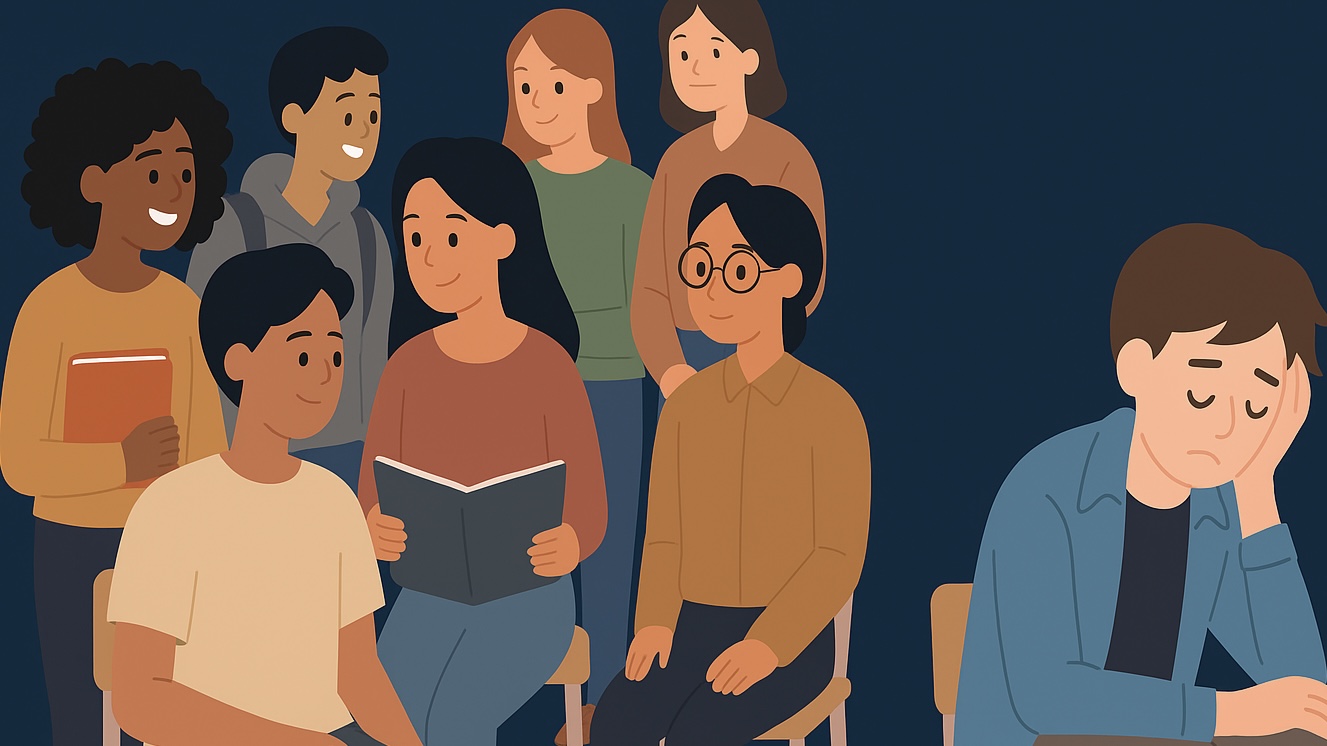
Have you ever been in a classroom or scrolling through your peer’s academia, wondering how everyone seems to have it all figured out- except you? And then you start to wonder if you actually earned your accomplishments or if it was just by “luck”. That creeping self-doubt, the fear of being “found out,” and the overwhelming urge to prove your worth every single day- this is the invisible burden of Imposter Syndrome.
But here’s the reality- you’re not alone.
WHAT EXACTLY IS ‘IMPOSTER SYNDROME’?
Imposter Syndrome, also known as Imposter Phenomenon, is not a diagnosable mental illness but a very real, psychological experience. Coined in 1978 by psychologists Dr. Pauline Clance and Dr. Suzanne Imes, the term originally referred to high-achieving women who felt they were not intelligent enough, despite evident success. Today, its understood to affect people across genders, age groups and backgrounds.
It is characterized by:
- Persistent self-doubt about one’s abilities and competence
- Fear of being exposed as a fraud, despite success
- Inability to internalize accomplishments, attributing them to luck or timing
- Perfectionism and overworking, to “make up” for the perceived incompetence
- Comparison and chronic insecurity, especially in competitive environments
You may refer to Psychology Today for more information.
HOW IT SHOWS UP IN STUDENTS’ LIVES
NEW STUDENTS: PRESSURE TO PROVE THEMSELVES
Whether it’s college, university, or a new course, walking into an academic realm can be exhilarating and daunting. You find yourself surrounded by people you perceive as knowing more, doing more, belonging more. You think every little mistake is a red flag. You miss an answer in class? You think it proves you’re not smart enough. You receive average grades? Suddenly, you’re questioning your admission itself.
Your self worth continues to be tied to performance, and the fear of not being “good enough” lingers quietly in the background noise of what you do.
RETURNING STUDENTS: THE GUILT OF “LATE START”
Students returning to school after a gap year, career change or any other reason may have a different type of imposter syndrome arise. Thoughts like:
- Am I too old to be starting this?
- People so much younger are so far ahead of me in life, will I ever be able to catch up?
- What if I have forgotten how to study and write exams?
Coming back to a structured environment can make us hyper-aware of the time we have “lost”. But here is the truth: time taken to heal, explore or take a break is not wasted time, and your path does not have to resemble anyone else’s to be valid.
CONSTANT COMPARISON GAME
Let’s face it- the life of a student today doesn’t stop at the classroom door. Your academics, internships, extra-curricular activities and even mental health are all under the full glare of the social media spotlight. You see a batchmate post about a third internship, someone else launching their own company and yet another recapping their great grades and social calendar.
You are quietly working away in the background, while your accomplishments, seemingly small and minor, often feel invisible in the highlight reels. The algorithm is not set up for struggle- it is set up for accomplishments. It is no wonder that such imposter syndrome tends to grow unchecked.
HOW TO DEAL WITH IT?
- Name It to Tame It: Awareness is the first step. When you feel that familiar doubt creeping in, call it out:
“This is imposter syndrome talking. Not the truth.”
Distinguishing the feeling from reality helps reduce its power.
- Challenge Your Inner Critic with Evidence: Keep a “success journal” or “confidence folder” with screenshots of praise, grades you’re proud of, projects you worked hard on, or kind words from professors and peers. Review it on hard days. It’s your proof.
- Talk to People You Trust: Share what you’re going through. You’ll be surprised how many people—your friends, seniors, even mentors—feel the same. Vulnerability invites connection and reduces shame. In all likelihood, nobody’s judging you as harshly as you’re judging yourself.
- Redefine What Success Means to You: Instead of measuring success by grades or constant wins, ask:
- Did I make an effort to try something I was unsure of?
- Did I ask for help when I needed it?
- Did I show up despite my fear and doubt?
These are just as valuable—if not more—than a ‘perfect’ performance.
- Learn to Rest, Not Just Work: Many students trapped in imposter syndrome overcompensate by overworking. They feel they must constantly prove their worth. But rest is not laziness—it’s part of sustainable success. Burnout helps no one.
- Seek Professional Help if Needed: If imposter syndrome is affecting your academic performance, mental health, or self-esteem significantly, talk to a counselor. Therapy can help you unpack deep-rooted beliefs and reframe negative thought patterns.
CONCLUSION
Every time you doubt your place in the room, remember this:Growth always feels like discomfort. You feel like an imposter not because you’re a fraud—but because you’re pushing yourself into new spaces, new challenges, and new possibilities.
So instead of asking, “Am I good enough to be here?”
Ask yourself: “What do I need to thrive here?”
You belong. You’re allowed to take up space. You’re not behind—you’re on your path. And most importantly, you’re not alone.