
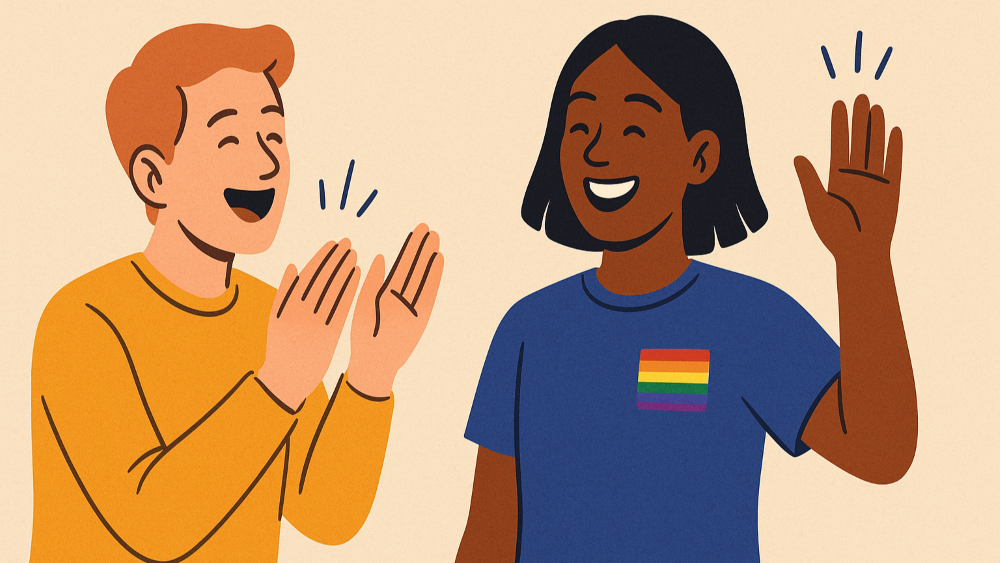
“Ally is not a label you give yourself—it’s a role others feel you’ve earned through your behavior.”
This reflection on allyship shared by a queer-informed therapist serves as an important reminder that allyship is not a position anyone can claim, but a practice that we work towards and grow into.
For members of the LGBTQIA+ community, having the support and presence of an ally can be significant. Sometimes that is supporting someone through gentle correction of a pronoun. Sometimes it is using your voice in brave ways when it is difficult to be the only one. More often than not it’s simply showing up- consistently, kindly and without waiting for the spotlight.
At a time when queer rights are still being debated and denied in so many spaces, being an ally is more than just having someone’s back, but working towards a world where they do not have to feel they have to look over their shoulder in the first place.
We spoke to members of the queer community, and a queer-informed therapist, about what allyship really is. Their words are honest, brave, and deeply human- full of gentle reminders, bold truths and moments of hope. Here’s what they had to say.
START WITH EMPATHY, NOT ASSUMPTIONS
“To me, allyship begins with something as fundamental as basic empathy for every person you encounter, regardless of who they are.”
Empathy is where allyship starts- not where it ends. One individual explained that while the more significant gestures may seem impactful, but nothing is more significant than when someone uses their privilege intentionally- by speaking up against homophobia or creating safer spaces for conversation.
Its about consistency: “not just during Pride Month, but all year round.”
ALLYSHIP IS AN ONGOING PRACTICE, NOT A SOCIAL MEDIA TREND
Real allyship means to learn- and unlearn- every day.
The queer-informed therapist emphasizes this:
“Stay informed about queer history, terminology, and challenge heteronormative or cisnormative assumptions ingrained by dominant culture.”
What does this look like in action?
It is using the right pronouns. It is correcting people when they are being inappropriate. It is uplifting queer-led initiatives. It is making space for LGBTQIA+ voices in conversations that constantly erase them.
In short, allyship is not performative. It is rooted in respect, accountability and care.
SUPPORT PEOPLE WHO ARE STILL FIGURING IT OUT
One respondent offered a strong reminder:
“Genuine allyship means offering unbiased support. A lot of people may not know or understand things that might be happening with themselves…”
For people just beginning to question, explore or understand their identities, allies can be the difference between clarity and confusion, being isolated and feeling supported. Being present, sometimes to simply witness without judgement, offers time and space for a person to take their time and it can mean everything.
REMINDER: IT’S THE LITTLE THINGS THAT CREATE SAFER SPACES
Coming out stories ran as another common thread, some painful, some full of hope! One came out to their mom who provided the most extraordinary support:
“She gently shared my journey with my aunts and cousins, using her own experience of learning and acceptance to help them understand and support me too.”
And there is sometimes just support in silent witness- like when someone sends a private message of encouragement after one has publicly shared their story:
“Made me realise that I’m not alone out there.”
Allyship can be loud and visible—but it can also be quiet and persistent.
SO, HOW CAN WE BE BETTER ALLIES?
Here are a few practices echoed across all voices:
- Learn the language. Understand terms like “asexual,” “bi-curious,” “non-binary,” etc.
- Use inclusive language and correct pronouns—every time.
- Speak up, especially when it’s uncomfortable.
- Support queer-led businesses, art, and activism.
- Create space, not just for celebration, but for conversation.
- Show up consistently—not just during Pride Month.
CONCLUSION
We don’t need to have all the answers. We just need to have the heart to listen, the humility to learn, and the courage to show up.
Because at the end of the day, as one of our contributors beautifully said:
“What matters is their willingness to keep learning, unlearning, and showing up with humility and courage. That’s what makes allyship truly meaningful.”